But the process still confuses a lot of people who aren't in the trenches every day. Contractors underestimate soil conditions. Project owners assume every rig can handle any distance. Both mistakes lead to stuck reamers, blown budgets, and missed deadlines.
This article breaks down how HDD actually works: the three-stage drilling process, the equipment that makes it possible, where it gets used, and what really drives cost and feasible distance. If you're planning a bore or just trying to understand a bid you received, you'll find practical answers here.
Key Takeaways
- HDD installs pipe or cable underground using just two surface access points.
- The process runs in three stages: pilot hole, reaming, and pullback.
- Reamer and bit design control torque stability and the number of required passes.
- Soil type, pipe diameter, and rig class determine cost and maximum bore distance.
- Key industries using HDD include telecom, water/sewer, power, oil & gas, and construction.
What Is Horizontal Directional Boring?
Horizontal directional boring is a steerable, surface-launched drilling method. A drill rig sits at one point on the surface and pushes a guided drill string along a shallow arc to a second surface point, sometimes hundreds or thousands of feet away. No open trench connects the two ends.
You'll often hear "directional boring" and "HDD" used as if they mean different things. In practice, there's no formal industry rule separating them by rig size. Most contractors use the terms informally: directional boring for smaller jobs and shorter crossings, and HDD for larger rigs and longer, more complex crossings.
Treat this as a naming convention, not a technical standard. The engineering principles are the same either way, and so are the benefits over traditional trenching methods.
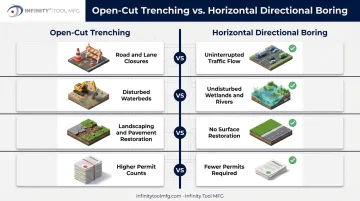
Why it beats open-cut trenching:
- Crosses roads and railways without closing lanes or tracks
- Passes under rivers and wetlands without disturbing the waterbed
- Avoids restoring landscaping, sidewalks, or pavement
- Reduces the number of permits tied to surface disruption
Delivering those benefits depends on equipment that can handle the boring process itself, starting with the pipe. Pipe used in HDD installations has to survive real installation stress, not just service conditions. Common materials include:
- HDPE (high-density polyethylene)
- PVC
- Ductile iron (in HDD-rated designs)
- Steel
Each material needs wall strength calculated for pullback tension, not just internal pressure. That's a design step, not an afterthought.
HDD vs. Other Trenchless Methods
Jack and bore is the other trenchless method people compare to HDD. It works differently:
| Factor | Jack and Bore | HDD |
|---|---|---|
| Typical length | Roughly 175-225 ft, up to 600+ ft | Hundreds to thousands of feet |
| Path | Straight | Curved, steerable arc |
| Access needed | Launch and receiving pits | Small entry/exit points |
| Best ground | Stable, cohesive soil | Wider range, with proper tooling |
Jack and bore suits short, straight crossings in predictable soil. HDD wins in sensitive or urban sites where digging large pits isn't an option.
The Horizontal Directional Drilling Process: Step by Step
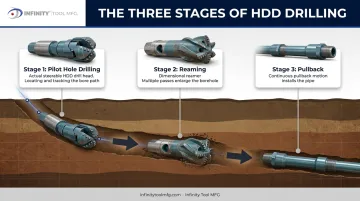
Every HDD project moves through three distinct stages. Skipping steps or rushing any one of them is how bores go sideways, literally.
Stage 1: Pilot Hole Drilling
The crew drills a small-diameter pilot hole along a pre-engineered path. A steerable head guides the bit, with the operator tracking position using one of three locating methods (covered in the next section) to avoid gas lines, fiber, and other buried infrastructure.
Drilling fluid does more than lubricate. During this stage, it:
- Cools the drill bit
- Removes cuttings from the borehole
- Stabilizes the hole walls to prevent collapse
Most fluid is water mixed with bentonite or a polymer additive, adjusted based on the soil the crew encounters.
Stage 2: Reaming (Hole Enlargement)
Once the pilot hole reaches the exit point, a back reamer gets attached and pulled back through, enlarging the hole to match the product pipe's outer diameter. Larger installations often need multiple reaming passes, each one slightly bigger than the last.
Reamer design matters more than most people expect. A poorly balanced reamer causes chatter and torque that swings unpredictably, which slows production and stresses the drill string.
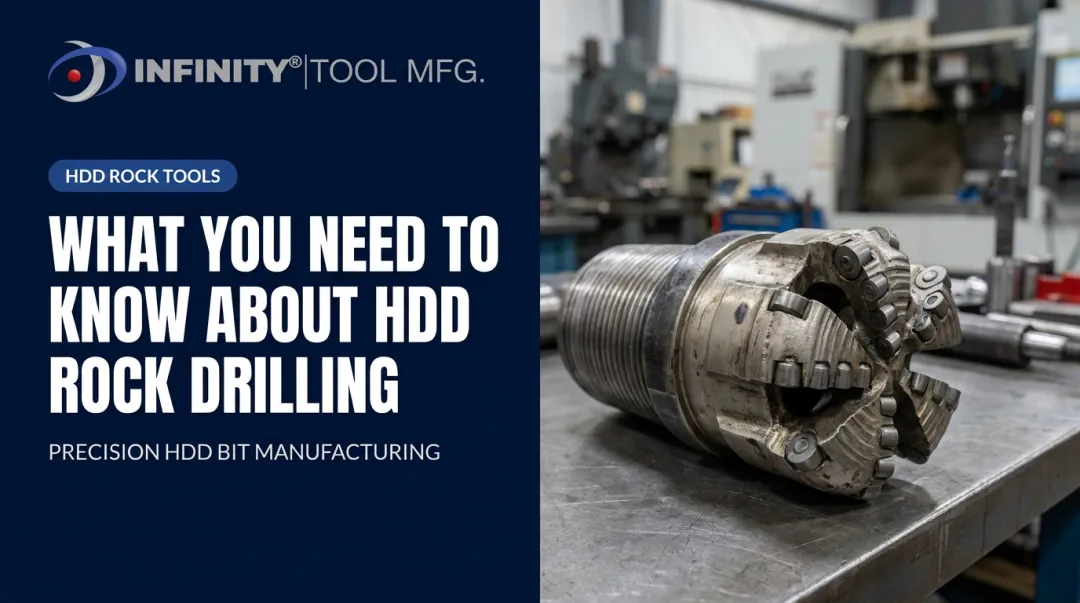
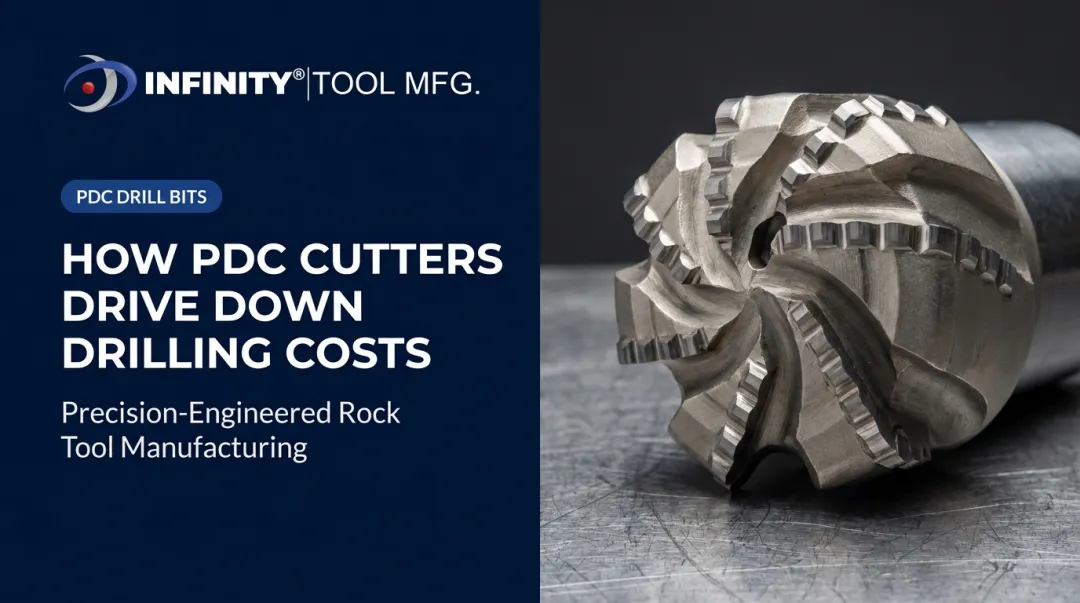
Infinity Tool MFG builds its PDC reamers with a taper-and-spiral geometry specifically to keep cutting forces centralized and symmetrical. On most jobs, that geometry allows crews to ream from pilot to finished bore diameter in a single pass, cutting out extra trips through the hole.
Stage 3: Pullback (Pipe Installation)
The product pipe connects behind the reamer (or a swivel between the two) and gets pulled continuously through the enlarged hole. Continuous motion matters here. Stopping mid-pull increases friction and raises the risk of pipe buckling or getting stuck.
Timelines vary widely by scope, as these two documented projects show:
| Project | Pilot Hole | Reaming | Pullback | Total Duration |
|---|---|---|---|---|
| 36-inch steel crossing (Trinidad) | <10 days | <30 days | ~21 hours | 42 days (incl. weather delay) |
| 720-ft, 24-inch HDPE (one-pass) | 4 days | N/A (one-pass) | 20 hours | N/A |
Every bore is different, but reaming passes and pipe diameter clearly drive total duration.
Essential HDD Equipment and Tooling
Rig selection and tooling choice aren't separate decisions. They work together, and getting either one wrong shows up fast in production numbers.
Drill Rigs: Mini, Midi, and Maxi
Crossing length and the thrust/pullback force required determine rig size:
| Rig class | Typical pullback capacity | Best suited for |
|---|---|---|
| Mini/compact | Up to roughly 40,000 lbs | Short crossings, pipe under 6 in., under 500 ft |
| Midi | Roughly 40,000-100,000 lbs | Mid-size utility work |
| Maxi | Over 100,000 lbs, up to 1 million+ | Long crossings, large-diameter pipe |
These boundaries shift depending on the manufacturer and publication year, so treat them as general guidance rather than a fixed standard.
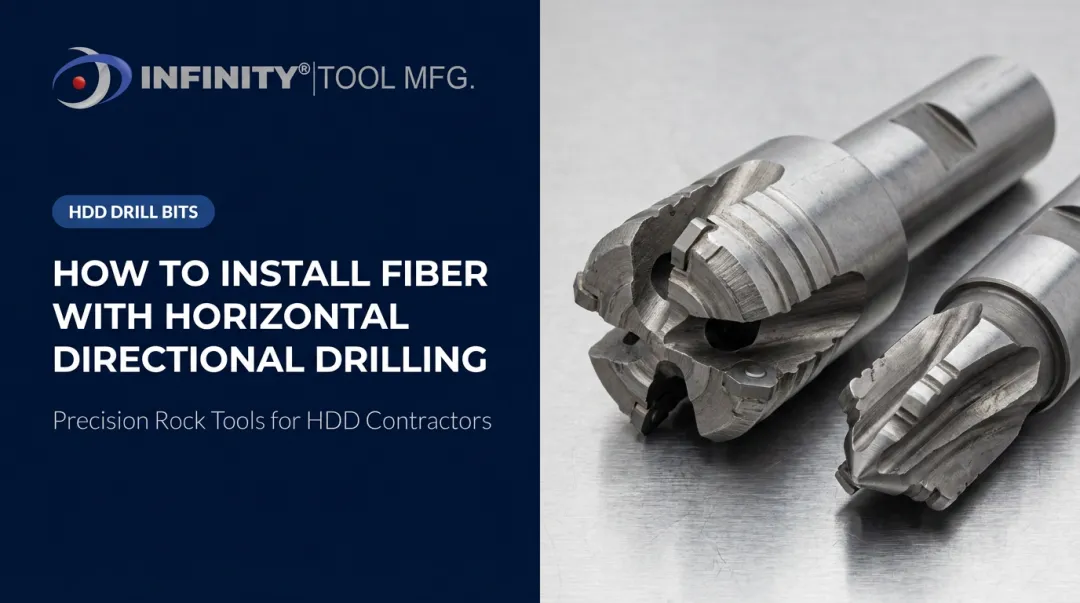
Drill Bits and Reamers
Bit material selection depends entirely on what's underground:
- High-carbon steel bits — suited for soft, cohesive soils like clay and silt
- Tungsten carbide or PDC bits — suited for rock, cobble, and mixed formations
In rocky or cobble-heavy ground, standard bits chip or lose consistent torque fast. Infinity Tool MFG's Rock Boss Extreme and Cobble Boss Extreme are purpose-built for those exact conditions, engineered to protect the PDC diamonds from chipping while holding steady torque. That consistency directly cuts down on non-productive time, which on a difficult bore can eat up more of the schedule than the drilling itself.
Locating and Guidance Systems
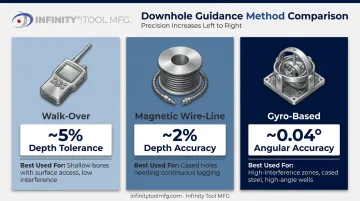
Three guidance methods dominate the industry, each with different accuracy characteristics:
- Walk-over — an operator tracks the drill head from the surface; older manuals cite around 5% depth tolerance
- Magnetic wire-line — a technical paper by H. Blok reports accuracy near +/-2% of current depth, meaning roughly 2.6 feet of variance at 130 feet deep
- Gyro-based — offers angular accuracy around 0.04 degrees, useful where magnetic interference is a problem
Longer or deeper bores generally benefit from wire-line or gyro systems, since walk-over accuracy degrades with depth and surface obstructions.
What Is Horizontal Directional Boring Used For?
HDD shows up anywhere utilities need to cross an obstacle without disturbing the surface. Primary applications include:
- Telecom and fiber optic conduit installation
- Power cable routing
- Water and sewer line replacement or expansion
- Gas and oil pipeline crossings
- Environmental remediation well casings
Common crossing scenarios where HDD gets chosen over open trenching:
- Under active highways and railways
- Beneath rivers, lakes, and wetlands
- Through environmentally protected or archaeologically sensitive land
- Across sites where surface restoration costs would exceed drilling costs
Infinity Tool MFG supplies tooling across several of these same sectors, including HDD, geothermal and water well, and general construction. That cross-industry exposure matters.
A bit engineered to survive mixed rock in a geothermal well tends to hold up just as well in a rocky HDD crossing. The underlying formation challenges overlap more than people assume.
Key Considerations: Cost, Distance & Soil Conditions
Cost Factors
HDD pricing varies by scope more than most quotes suggest. Main cost drivers include:
- Soil and rock conditions along the bore path
- Bore length and pipe diameter
- Site access and staging space
- Local permitting fees and inspection requirements
Public bid data illustrates just how wide that range can get. A 2025 NCDOT bid tabulation lists paired small-diameter conduit installations priced between $17.40 and $27.00 per linear foot.
Larger HDPE water main bores in the 4- to 12-inch range have been priced between $100 and $150 per foot in separate municipal planning documents. Get a site-specific quote instead of relying on generic per-foot averages, since those numbers don't hold up once diameter and geology enter the picture.
How Far Can Directional Boring Go?
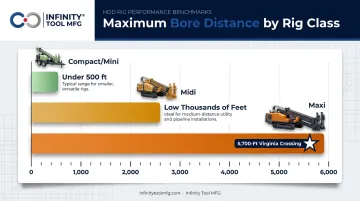
Distance capability tracks closely with rig class:
- Compact rigs generally handle crossings under 500 ft for pipe below 6 inches
- Midi rigs extend into the low thousands of feet depending on diameter
- Maxi rigs have completed documented crossings well beyond 2,000 ft
One record-setting project, a 42-inch pipeline installation in Virginia, reached 5,700 feet in a single bore. That's an extreme case, not a guarantee. Guidance system accuracy becomes the limiting factor on long bores, since even a small percentage error compounds over distance.
Soil, Rock, and Water Considerations
Ground conditions dictate tooling choice more than any other single variable. PDC bits handle consistent, softer formations efficiently, while DTH hammer bits power through mixed or harder rock with fewer surprises.
Favorable soils:
- Clay
- Silt
- Sand (when not loose or saturated)
- Solid, continuous rock
Problematic conditions:
- Loose cobble and boulders
- Karst formations with hidden voids
- Mixed ground with unpredictable hardness changes
Does HDD use water? Most bores run a bentonite-and-water drilling fluid slurry to cool the bit, carry cuttings, and stabilize the borehole.
Smaller residential bores sometimes get away with plain water or no fluid at all. That's the exception rather than the standard approach, and it only works in stable, cohesive soil.
Frequently Asked Questions
How much does directional boring cost?
Cost depends on soil type, bore length, pipe diameter, and permitting fees. Typical pricing ranges from about $17 per foot for small conduit to $150 per foot for large water mains, so request a site-specific quote for accuracy.
What is directional boring used for?
Common applications include telecom and fiber conduit, water and sewer lines, gas and oil pipelines, power cable, and utility crossings under roads, railways, and waterways.
How far can directional boring go?
Small rigs typically handle a few hundred feet, while maxi rigs have completed crossings exceeding 5,000 feet on large-diameter projects. Guidance system accuracy becomes the main limiting factor as distance increases.
Does directional boring use water?
Most bores use a water-based drilling fluid mixed with bentonite to cool the bit and stabilize the hole. Smaller residential bores in stable soil sometimes use plain water only.
What's the difference between directional boring and horizontal directional drilling (HDD)?
The terms are often used interchangeably. Informally, "directional boring" tends to describe smaller rigs and shorter crossings, while "HDD" refers to larger rigs handling longer distances.
Can directional boring be used in rocky or cobble soil conditions?
Yes, though it's more challenging than soft-soil bores. Purpose-built PDC bits and reamers, like Infinity Tool MFG's Rock Boss Extreme and Cobble Boss Extreme, are engineered specifically to handle rock and cobble formations while maintaining consistent torque.