The stakes are measurable. One SPE field study found that an integrated nozzle configuration increased overall rate of penetration by an average of 18% across 134 bit runs, simply by improving how fluid moved at the bit face. Yet many operators still treat flushing as a background function rather than a variable they actively manage, leading to avoidable clogging, bit wear, and downtime.
This guide breaks down exactly how the flush drilling method works under high pressure, stage by stage.
Key Takeaways
- Pressurized water, air, or mud clears cuttings and cools the bit during flush drilling
- Balanced pressure and flow prevent clogging, borehole erosion, and formation fractures
- The cycle runs continuously through initiation, core operation, regulation, and output
- Media and bit design shift by formation type, from soft soil to hard rock
- Flush-port geometry on bits and reamers directly affects cutting removal and cutter protection
What Is the Flush Drilling Method?
Flush drilling pumps a pressurized medium, water, air, or mud slurry, through the drill string and out through the bit face. This process removes cuttings, cools the cutting structure, and stabilizes the borehole wall as part of a controlled circulation system.
Without it, cuttings pile up around the bit, friction generates excess heat, and the borehole risks collapse or blockage. ASTM's standard guides for direct rotary and direct air-rotary drilling both define this same pattern: medium down the drill rods, cuttings back up the annulus.
What Flush Drilling Is Not
It's easy to confuse flush drilling with related but distinct practices:
- Dry drilling with dust extraction uses suction and a collector to pull cuttings out, no liquid transport involved
- Surface water spraying suppresses dust but doesn't circulate fluid to the bit or return cuttings through a defined annular path
- Flush drilling requires both delivery to the bit and a return path, governed by defined pressure and flow-rate conditions
This distinction matters because fluid dynamics, rather than bit coatings or rig horsepower, physically move cuttings out of the hole. Drilling teams still spec exact flush parameters on every job, even as bit metallurgy advances.
Main Flushing Media
- Water flushing – common in softer formations and shallow HDD bores
- Air flushing – standard for DTH hammers in mining and exploration
- Air-water mixed flushing – used where dust control and cooling both matter
- Mud/bentonite slurry flushing – favored in oil & gas, geothermal, and larger-diameter HDD work for its hole-stabilizing filter cake
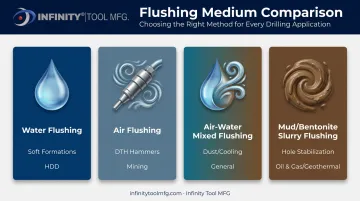
The right choice depends on formation type (soil versus rock) and drilling method.
How Does Flush Drilling Work Under High Pressure?
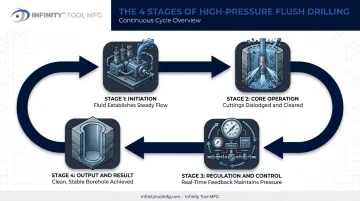
High-pressure flush drilling is a continuous sequence of stages that together determine drilling speed, tool life, and hole quality.
Initiation
Before the bit ever touches the formation, the pump pushes the flushing medium through the drill string to nozzles at the bit face. This flow has to establish itself first, not switch on reactively once drilling starts.
The common failure point here is starting pressure. If pump volume is too low at initiation, circulation never fully establishes, and flush ports begin clogging almost immediately, sometimes before the bit makes meaningful progress.
Core Operation
Once flow is established, the medium exits through engineered flush ports or nozzles, jetting directly onto the cutting face. This high-velocity jet:
- Dislodges rock or soil cuttings from the cutting surface
- Entrains debris into the annular space around the drill string
- Transports that debris back along the borehole toward the surface
This is where pressure and volume flow do their real work. Get the balance right, and you get consistent penetration rate, effective cooling, and clean cutting transport.
Get the balance wrong, though, and problems compound fast. Too little pressure and ports clog; too much and you risk edge spalling on cutters or erosion of the borehole wall.
Nozzle and flush-port geometry, whether spiral, tapered, or symmetrical, plays a direct role here too. Well-designed ports increase flushing efficiency and help shield cutting elements, such as PDC diamonds, from chipping under sustained high-pressure jetting.
Regulation and Control
Operators don't set pump pressure once and walk away. Output gets calibrated continuously against formation type, depth, and bit diameter as conditions change downhole.
Monitoring return flow is the main feedback loop:
- Check color and consistency: changes can signal a shift in formation or an emerging blockage
- Watch return rate: a slowing return often means pressure loss somewhere in the system
- Adjust pump output: before a partial blockage becomes a stuck bit or lost circulation event
Skipping this step is expensive. Unregulated pressure leads to bit sticking, borehole instability, accelerated tool wear, or lost circulation, all of which translate directly into non-productive time on site.
Output and Result
Done correctly, the process produces a clean, dimensionally accurate borehole with a debris-free cutting face and a properly cooled bit. That output feeds directly into the next phase of work, whether that's reaming, pipe or conduit pullback, casing installation, or tool insertion.
Consistent hole cleaning has a measurable payoff. The same SPE nozzle study cited earlier ties improved bit hydraulics to an 18% average ROP gain across 134 runs, confirming flushing performance as a direct driver of drilling economics.
Where Is Flush Drilling Used?
Flush drilling shows up at specific points across nearly every drilling discipline:
- HDD – pilot bore drilling and reaming/pullback stages both rely on continuous fluid circulation to guide the head and clear the enlarged bore
- Oil & gas and geothermal – mud-based flushing paired with PDC bits handles cooling, pressure control, and hole stability in deep, high-temperature wells
- Water well drilling – casing and completion stages use flushing to keep the bore clean through variable soil layers
- Mining and exploration – blast hole and exploration drilling typically use air flushing through DTH hammers for fast, forceful cuttings evacuation
Formation type drives medium selection. Soft soil generally favors water or air-water mixes; harder rock formations call for higher pressure and volume, often paired with more aggressive nozzle designs.
A documented HDD project in Texas illustrates the range involved: crews crossed both Texas Highway 171 and a Santa Fe railroad track using an air hammer approach. The pilot bore used an 800-gallon fluid volume over a 640-foot run before backreaming and pipe installation.
Variable ground conditions like this are exactly why medium and pressure settings aren't one-size-fits-all.
Choosing the Right Tools for High-Pressure Flush Drilling
Bit and reamer design governs how well flushing actually performs downhole. The number, placement, and shape of flush ports control fluid volume, debris clearance, and how well cutting elements survive repeated high-pressure jetting.
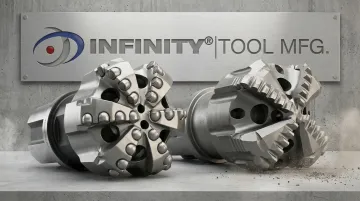
Infinity Tool Manufacturing builds this thinking directly into its product lines. The Big Flush PDC Bit, an 8-inch, 5-blade design, is engineered to deliver high volumes of drilling fluid at low pressure, suited to softer conditions like sand, shale, geothermal, and water well formations where aggressive erosion isn't the goal.
For tougher ground, the Rock Boss Extreme and Cobble Boss Extreme pair controlled flush volume with centralized, tapered, and spiral reamer geometry. This combination:
- Protects diamonds from chipping during aggressive cutting
- Reduces chatter and fluctuating torque across the bore
- Lets a single tool ream from pilot to finish in most holes, cutting out extra passes
When standard configurations don't fit a project's formation or pressure requirements:
- Infinity's in-house engineering and drafting team works from a client's specifications
- CNC machining at the Benton, Illinois facility allows flush-port and nozzle adjustments tailored to specific pressure and volume needs
- Custom builds support oil & gas, geothermal, HDD, and mining applications where off-the-shelf tools fall short
For in-stock items, dispatch typically runs within two working days; custom configurations are scoped through direct consultation with the technical sales team.
Conclusion
Strip away the jargon, and high-pressure flush drilling comes down to one continuous balancing act: pressure and volume flow working together to remove cuttings, cool the bit, and keep the borehole stable. Every stage (initiation, core operation, regulation, and output) depends on getting that balance right.
Operators who understand this logic make better calls on flushing medium, pump capacity, and bit or reamer design. That translates into faster bores, fewer stuck-pipe incidents, and lower tool replacement costs, regardless of whether the job is a shallow water well or a deep geothermal wellbore. Infinity Tool MFG builds its PDC and DTH bits around that same balance.
Frequently Asked Questions
What is the flush drilling method?
Flush drilling uses pressurized fluid or air to remove cuttings, cool the bit, and stabilize the borehole while drilling. The medium travels down the drill string and returns cuttings through the annular space.
What's the difference between flush drilling and standard drilling methods?
Flush drilling relies on defined pressure and flow-rate conditions for continuous cutting removal and a controlled return path. Basic dry drilling uses suction instead, while unregulated wet drilling lacks that defined circulation loop entirely.
How much pressure is typically used in flush drilling?
Pressure varies by drill diameter, depth, and formation. For example, an Epiroc DTH hammer specifies 6-30 bar for 165-178mm bits, showing why manufacturer specs matter more than a general figure.
Can flush drilling be used in rock formations?
Yes. Specialized bit designs, higher pressure settings, and increased flow volume allow flush drilling to work effectively in hard rock, not just soil or soft formations. DTH hammers with air flushing are common in these conditions.
What media are commonly used in the flush drilling method?
The primary media are water, compressed air, air-water mixtures, and bentonite-based mud or slurry. Selection depends on formation hardness, drilling method, and whether borehole stabilization or dust control is the priority.
Does flush drilling affect drill bit lifespan?
Yes. Proper flushing cools the bit and reduces friction, limiting thermal wear on cutting elements. Poor or inconsistent flushing accelerates overheating, cutter damage, and can shorten bit life significantly.