The idea sounds simple. Drill a small hole first, then drill or fasten the real one. But results vary a lot depending on bit size, material, drilling speed, and technique. Get any of those wrong and you end up with split wood, a bit that wanders off-mark, or a bore that's misaligned before you've even started the real work.
This guide walks through the exact four-step process, explains when a pilot hole actually matters, covers what you need before you start, and flags the mistakes that ruin otherwise good work.
Key Takeaways
- A pilot hole guides a fastener or bit, preventing splitting and keeping your drilling accurate.
- Choosing the correct bit size affects hole accuracy more than any other variable.
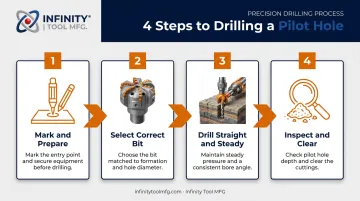
- The process breaks down into four repeatable steps: mark, select, drill, inspect.
- HDD, mining, and water well drilling rely on pilot holes before reaming to full bore size.
How to Drill a Pilot Hole in 4 Easy Steps
Step 1: Mark and Prepare the Drilling Location
Start with a pencil mark for softwood or general layout work. On metal, glass, or hard surfaces, switch to a center punch or awl. A punch creates a small dent that stops the bit tip from skating across the surface before it bites in.
Before you pick up the drill:
- Identify the material: Softwood, hardwood, sheet metal, masonry, or rock all call for different bits and pressure.
- Check thickness: Thin stock needs a shallower approach than thick lumber or plate steel.
- Clamp the workpiece: A shifting board or panel is one of the fastest ways to end up with a crooked hole.
Step 2: Select and Set Up the Correct Drill Bit
Bit selection is where most pilot holes succeed or fail. For a fastener, Lowe's recommends matching the bit to the screw's inner diameter, excluding the threads, a rule commonly called "shank minus threads."
A quick reference for wood screws:
| Screw Gauge | Softwood Pilot | Hardwood Pilot |
|---|---|---|
| #4 | 1/16 in. | 5/64 in. |
| #6 | 3/32 in. | 7/64 in. |
| #8 | 7/64 in. | 1/8 in. |
| #10 | 1/8 in. | 9/64 in. |
| #12 | 9/64 in. | 5/32 in. |
For metal fasteners, the correct size depends on screw type, substrate, and sheet thickness, not gauge alone. Match bit type to the job:
- Twist bits for wood and general metal
- Masonry bits for brick and concrete
- Rock or PDC bits for stone and heavy ground drilling
Once you've chosen your bit, seat it fully in the chuck and tighten it down. Set your drill's speed and torque or clutch setting to match the material — soft, dense, or brittle stock all behave differently under the bit.
Step 3: Drill the Pilot Hole Straight and Steady
Hold the drill perpendicular to the surface. Apply steady, moderate pressure and let the bit do the cutting rather than forcing it through. Forcing a bit is one of the fastest ways to snap it or blow out the back of the material.
Drill to the correct depth:
- Match fastener length for standard screw or nail applications.
- Use an engineered depth for staged industrial drilling, where the pilot sets up a later reaming pass.
- Pause on thick material to clear chips and let the bit cool before continuing.
- Use a depth stop or tape marker if you're drilling multiple holes that need to match.
Step 4: Inspect, Clear, and Move to the Next Step
Pull the bit out and check your work. The hole should be the right diameter, depth, and straightness. If a fastener won't seat cleanly, re-drill slightly larger rather than forcing it in.
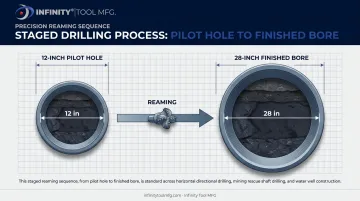
Clear dust or debris before inserting the fastener or moving to the next drilling stage. On larger industrial bores (water well, geothermal, HDD, or mining), the pilot hole doesn't stay small. It gets enlarged using a purpose-built reamer.
Infinity Tool MFG's PDC reamers ream from pilot to finish bore in a single pass on most holes. The centralized design keeps the cut symmetrical and protects the diamond cutters from chipping during the pass.
When Should You Drill a Pilot Hole?
Not every fastener needs one. Knowing when it adds value versus when it's just extra work saves time.
Drill a pilot hole when:
- Working with hardwood, which splits easily without one
- Fastening near an edge or into end grain
- Precision placement matters (cabinetry, trim, hardware)
- Drilling into metal or masonry, where bits tend to wander on hard, slick surfaces
Skip it when:
- Driving small screws into softwood
- Using self-drilling fasteners designed to cut their own path without splitting risk
- Attaching hardware that already includes pre-drilled guide holes
Industrial drilling follows the same logic at a much larger scale. In horizontal directional drilling, mining, and geothermal work, a small pilot bore establishes alignment and reduces torque load before the hole is enlarged.
NIOSH documented this staged approach during a mine rescue operation, where crews drilled a 12-inch pilot hole before enlarging it to 28 inches for rescue access. The staged approach protects equipment and speeds up bore completion, whether you're rescuing miners or setting a water well casing.
What You Need Before Drilling a Pilot Hole
Preparation directly affects hole accuracy, bit life, and whether your formation holds up once you ream to full diameter.
Equipment and Tools
- Pilot bit sized to your reaming sequence for HDD and directional bores where a smaller lead hole guides the reamer
- Rig with adjustable torque and rotation control for consistent penetration across variable ground conditions
- Bit selection matched to the job — standard drag bits, tricones, or specialty PDC and rock bits for hard formations and mining applications
Materials and Reference Data
Keep bore logs and formation data on hand, especially in mixed-ground conditions where a single bit type won't cut cleanly through the full run. Reference a pilot bore size chart matched to your reamer diameter and ground hardness rather than guessing. The difference between a soft clay pilot and a hard rock pilot for the same reamer can mean several bit changes.
Skill and Safety Basics
Understand appropriate rotation speed and torque for your formation before you start. Wear proper PPE and secure your rig setup: hard rock and mixed-ground drilling throw debris and dust that inadequate protection won't handle well.
Key Parameters That Affect Pilot Hole Results
Consistent pilot holes come down to controlling a handful of variables, not luck.
Drill Bit Size and Diameter
An undersized bit risks splitting or binding as the fastener forces its way through. An oversized bit reduces grip and holding strength. This single choice determines whether the material stays intact and whether the fastener holds once it's seated.
Drill Speed and Torque
There's no single RPM number that works across materials. Recommended speed changes with bit diameter, material hardness, and hole depth.
Use this as a general reference point:
| Material | Bit Diameter | Recommended RPM |
|---|---|---|
| Wood | 1/16" – 3/16" twist bit | ~3,000 RPM |
| Dense hardwood | Larger diameters | Well below 3,000 RPM |
| Free-cutting steel | 1/16" | Over 8,000 RPM |
| Free-cutting steel | 1/2" | ~1,000 RPM |
Too much speed on metal or masonry overheats the bit and wears it out fast. Too little torque on dense material just stalls it.
Hole Depth and Alignment
A shallow pilot loses its guiding effect before the fastener or bit reaches full depth. An off-angle hole misaligns whatever comes next, whether that's a screw or a reamed industrial bore. Depth and alignment together determine whether the finished hole stays straight and seated correctly.
Material Hardness and Density
Hardwood, metal, and rock all demand different bit types and pressure than softwood or plastic. In rock drilling, this is why PDC and DTH bits exist as separate tool categories rather than scaled-up twist bits.
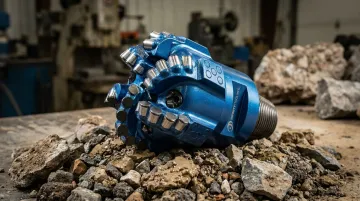
Infinity Tool MFG's PDC bits, for example, are built for low to medium hardness formations up to 25,000 PSI compressive strength (sand, shale, mudstone, sandstone, and limestone). These bits use synthetic diamond cutters that shear rock rather than crush it.
That shearing action means lower torque requirements and less vibration through the drill string, which matters just as much on a pilot pass as it does on the finished bore.
Common Mistakes When Drilling Pilot Holes
A few recurring errors account for most pilot hole failures:
- Skipping the pilot hole entirely on hard or brittle materials, leading to cracked or split workpieces
- Using the wrong bit size relative to the fastener or intended final bore diameter
- Drilling off-angle or without securing the workpiece, causing the bit to wander or come out crooked
- Ignoring warning signs like excessive resistance or a hot bit
That last one deserves attention. A hot bit or sudden resistance usually means your speed or pressure doesn't match the material. The CCOHS notes that dull bits are a common cause of breakage and warns against applying extra pressure to push through.
If you feel that resistance spike, stop drilling. Check the bit for wear, confirm your speed matches the material and diameter, clear the chips, then resume with controlled pressure instead of force.
Frequently Asked Questions
What is a drill pilot?
A pilot hole (or pilot drill) is a small guide hole drilled first to direct a larger bit or fastener accurately. It reduces splitting and keeps the fastener on target.
When should a pilot drill be used?
Use one for hardwoods, precise fastener placement, or hard and slippery materials like metal and masonry where bits tend to wander. Even large-scale industrial bores rely on pilot holes for alignment.
What size drill bit should I use for a pilot hole?
Match the bit to the screw's inner diameter, excluding the threads — the "shank minus threads" rule. For exact sizing, check a pilot hole chart matched to screw gauge and material.
How deep should a pilot hole be drilled?
The hole should roughly match the fastener's length. Use tape on the bit or a depth stop to keep multiple holes consistent.
Do self-tapping or self-drilling screws need a pilot hole?
Self-drilling screws generally skip the pilot hole in thin material since they cut their own path. Self-tapping screws may still need one in thicker or harder stock, depending on the point style.
Can pilot holes be used for large-diameter industrial drilling?
Yes. HDD, mining, and water well drilling all use pilot holes before reaming to full bore size. Infinity Tool MFG's PDC reamers ream from pilot to finish bore in a single pass on most holes.