Introduction
Drill a bore through the wrong rock with the wrong bit, and you'll know it fast: slow penetration, chattering vibration, or a tool pulled early for a change-out you didn't budget for.
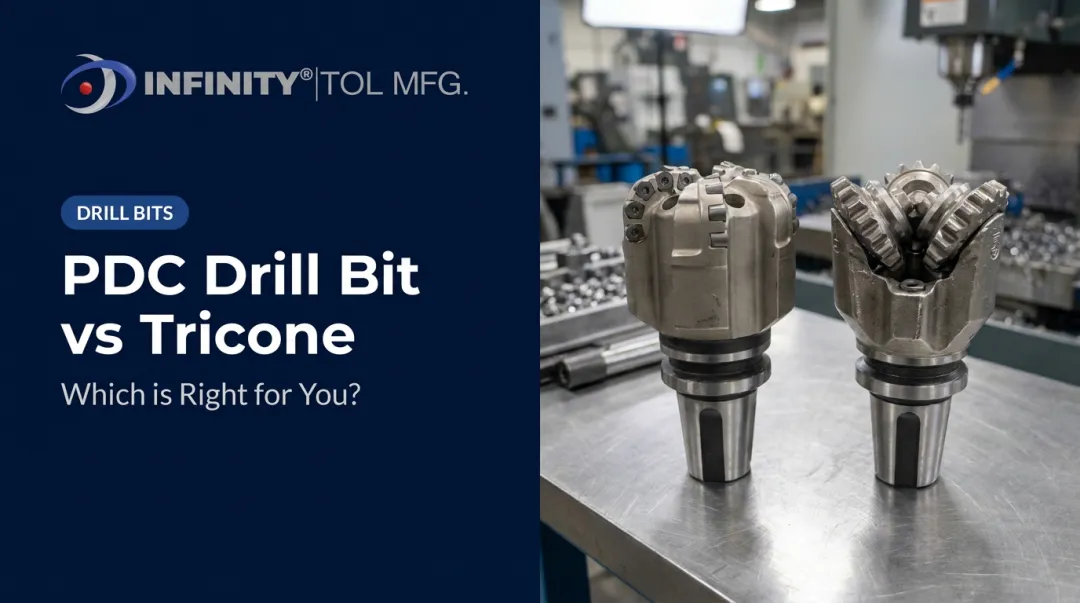
PDC and roller cone bits are the two dominant cutting technologies used across oil & gas, geothermal, mining, water well, and HDD projects. Each breaks rock differently.
Picking wrong doesn't just cost you a bit. It drives up cost-per-foot, triggers premature failure, and adds hours of non-productive tripping time you can't get back.
This guide breaks down how each bit cuts, where each performs best, and how long they last. It also covers what they cost, so you can match the right tool to your actual ground conditions instead of guessing.
Key Takeaways
- PDC bits shear rock with diamond cutters; roller cones crush and chip it instead
- Soft, uniform formations favor PDC bits; harder, mixed rock favors roller cones
- Faster drilling and longer bit life often favor PDC bits, but at higher cost
- No bit wins universally; formation hardness and drilling goals decide the best choice
- Hybrid bits blend PDC and roller-cone elements for transitional, interbedded ground
PDC vs Roller Cone Bit: Quick Comparison
The core difference comes down to mechanics: one bit shears, the other crushes. That single distinction drives almost every downstream decision about formation fit, speed, and durability.
| Factor | PDC Bit | Roller Cone Bit |
|---|---|---|
| Cutting action | Shears rock via fixed diamond cutters | Crushes/chips rock via rotating cones with teeth or inserts |
| Best formations | Soft-to-medium, homogeneous rock (shale, limestone, sandstone) | Very soft to extremely hard, abrasive, or interbedded rock |
| Durability | Long life in ideal conditions; vulnerable to impact chipping in fractured zones | Impact-resistant from moving parts; teeth/bearings wear faster in abrasive ground |
| Rate of penetration | Higher ROP in suitable formations | More consistent, generally slower, across variable rock |
| Cost profile | Higher upfront cost, often lower cost-per-foot | Lower initial cost, potentially higher total cost from frequent trips |
Industry-wide, PDC's fixed-cutter design has become the default for a reason. According to Drilling Contractor's history of PDC development, PDC bits drilled more than 90% of worldwide footage by 2015.
That doesn't mean tricones are obsolete; it means PDC dominates where formations behave predictably. In fractured, mixed, or unusually hard ground, roller cone bits still earn their keep, and often outlast PDC by simply surviving the impact.
What Is a PDC Bit?
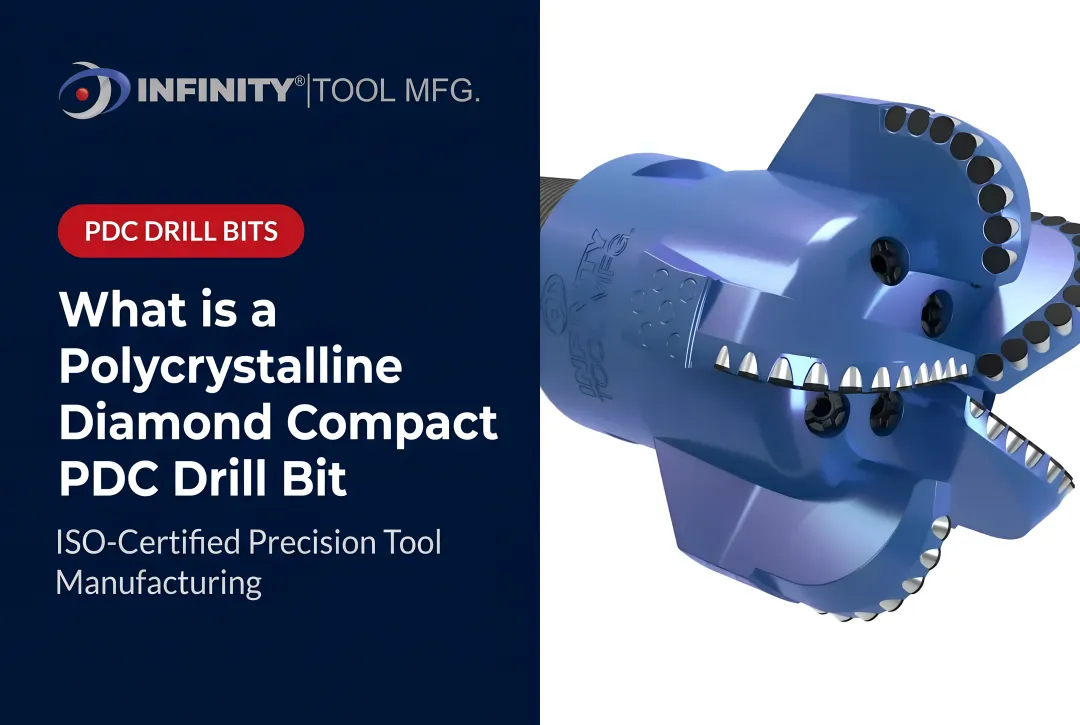
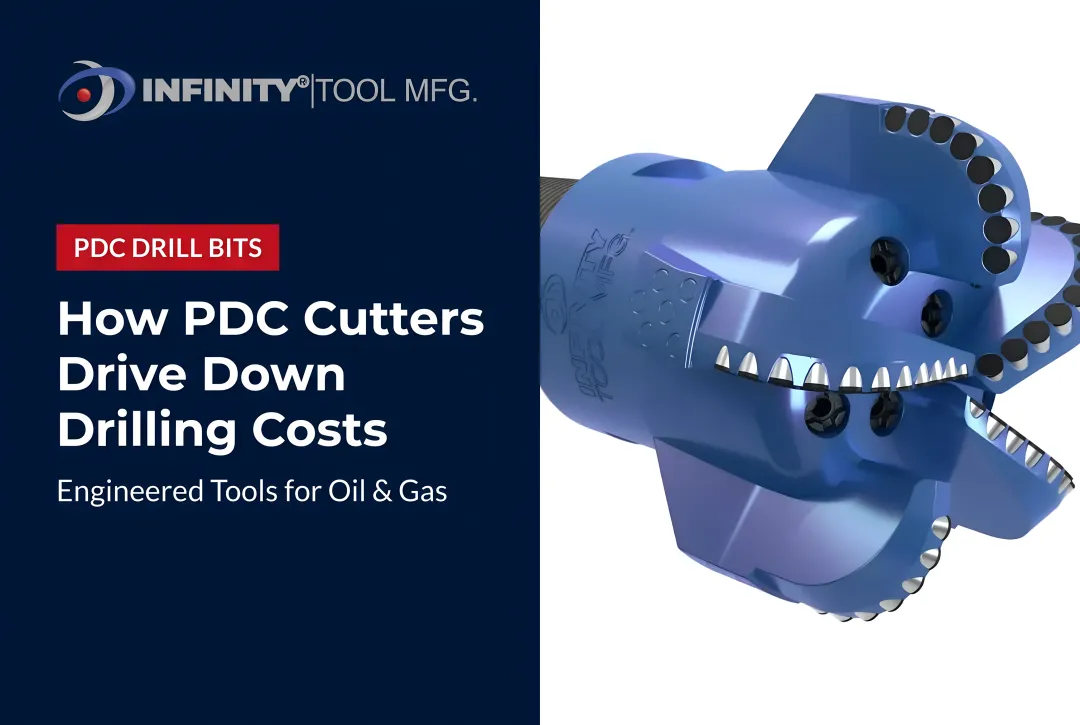
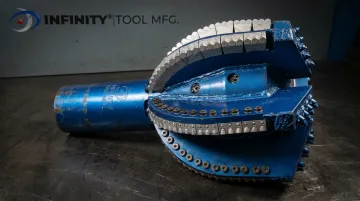
A PDC (Polycrystalline Diamond Compact) bit is a fixed-cutter tool. Synthetic diamond compacts are bonded to a tungsten carbide substrate, then mounted along the bit's blades in a fixed position — no moving parts, no cones, no bearings to fail downhole.
That simplicity has real operational payoff:
- No rotating cutting structure means one less failure point compared to bearing-supported cones
- Continuous shearing action scrapes rock rather than repeatedly impacting it
- Repairable cutters on some designs extend usable bit life across multiple runs
PDC bits aren't one-size-fits-all, either. Body construction splits into matrix-body designs, which resist abrasion well but run more brittle, and steel-body designs, which flex more but sacrifice some wear resistance. Blade count also varies by application, with more blades generally trading raw ROP for added stability in harder intervals.
Infinity Tool MFG builds on this fixed-cutter foundation with tapered and spiral PDC reamer designs engineered to cut a symmetrical hole while shielding the diamond cutters from chipping. That protection matters most when a pilot bore needs to be reamed to finish diameter without a second trip.
Use Cases of PDC Bits
PDC bits show up at nearly every stage of a drilling program where formation conditions cooperate:
- Pilot holes in oil & gas and HDD rock crossings, where continuous shearing keeps ROP high
- Reaming operations, where a single pass enlarges the pilot bore to finished diameter
- Directional and horizontal sections, where fixed-cutter stability supports smoother steering
Shale plays and limestone formations are classic PDC territory. So are HDD rock crossings through relatively homogeneous ground, where a fixed-cutter bit can complete a bore with fewer trips than a comparable tricone run.
Operating parameters like RPM, weight-on-bit, and fluid flow shift with bit diameter and formation. Confirm specifics with your bit supplier's engineering team before finalizing a program.
What Is a Roller Cone Bit?
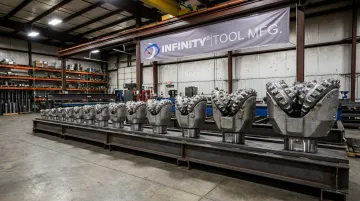
Roller cone (tricone) bits use two or more independently rotating cones, each fitted with either milled steel teeth or tungsten carbide inserts (TCI). As the bit turns, the cones roll and crush the formation beneath them, gouging softer rock and chipping harder rock as needed.
That rolling action delivers a different set of strengths:
- Versatility across soft, medium, and hard formations without swapping bit families
- Strong impact resistance, since moving cones absorb shock rather than transferring it straight into fixed cutters
- Better adaptability to interbedded layers, where rock character changes unpredictably with depth
Reduced risk of catastrophic failure in fractured zones is the real payoff: a tricone can survive conditions that would chip a PDC cutter clean off its substrate.
Mill-Tooth vs. TCI Designs
Milled-tooth bits typically suit softer formations, where steel teeth can bite in cleanly. TCI bits, built with tungsten carbide inserts, extend roller cone use deep into harder rock.
Compressive strength ratings vary by manufacturer and model, but roller cone designs as a category span an exceptionally wide range. Infinity Tool MFG's tricone lineup, for example, runs from 2-15/16 inches to 26 inches in diameter, covering nearly every formation type a contractor might encounter.
Use Cases of Roller Cone Bits
Roller cone bits earn their place in situations where formation certainty is low:
- Exploratory drilling, where rock characteristics aren't fully known ahead of the bit
- Interbedded formations, alternating hard and soft layers in the same run
- Fractured zones and quarrying operations, where unpredictable rock behavior demands durability over speed
- **Hard igneous or metamorphic rock** in mining applications, where impact resistance matters most
If you're drilling somewhere with no reliable offset data, a tricone's tolerance for the unexpected often outweighs the raw speed advantage PDC offers in known ground.
PDC vs Roller Cone: Which Is Better?
Neither bit type wins outright. The right call depends on five factors you should weigh before spending on tooling:
- Formation hardness and homogeneity: consistent, softer rock favors PDC
- Fractures or interbedded layers: variable ground favors roller cone
- Directional drilling requirements: fixed-cutter stability often steers better
- Budget: upfront cost versus total cost-per-foot over the interval
- Rig capability: available RPM and WOB limits constrain either bit's performance
Choose PDC when you're prioritizing ROP, directional control, and lower cost-per-foot in soft-to-medium, homogeneous rock. Choose roller cone when you're drilling through hard, abrasive, or highly variable formations where surviving impact matters more than outright speed.
Field data backs this up. A 2020 World Geothermal Congress case study reported PDC bits reaching up to 20 meters per hour in 12¼-inch vertical sections, compared with just 3 to 4 meters per hour for roller cone runs in similar intervals.
That's a field-case benchmark, not a universal multiplier, but it illustrates the gap when formation conditions favor shearing over crushing.
Real-World Case Study: Bit Selection for HDD Rock Crossings
HDD contractors face this decision on nearly every rock crossing. Overburden depth, compressive strength, rock layering, and bore length all factor into which tool goes downhole first.
Infinity Tool MFG's guidance for rock crossings follows a straightforward logic:
- PDC bits for softer-to-medium rock, generally up to around 25,000 psi compressive strength, matching the operating range built into their PDC pull reamers
- Tricones for a broader hardness range and fractured or uncertain ground where impact resistance outweighs raw speed
- DTH hammers for the hardest formations, where percussive force outperforms both shearing and crushing
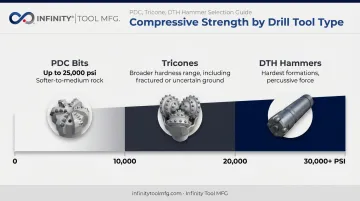
The operational challenge is simple to state and expensive to get wrong: mismatch tooling to compressive strength, and you'll make extra trips and burn rig time that wasn't budgeted. Matching bit type to actual ground conditions reduces trips and improves footage-per-run on the next crossing.
If you're staring down a crossing with mixed or uncertain rock data, Infinity Tool MFG's engineering team can help work through bit selection for your specific project before you commit to a tooling order.
Conclusion
There's no universal winner between PDC and roller cone bits. The right choice comes down to formation type, homogeneity, and what you're actually trying to accomplish downhole — speed, directional accuracy, or surviving unpredictable rock without a mid-run bit change.
Cost-per-foot and tripping time both hinge on this decision, ultimately shaping your overall drilling efficiency. Manufacturers offering both custom PDC and tricone designs, like Infinity Tool MFG, can help engineer the right solution once you've got a clear read on your geological data.
Frequently Asked Questions
What is the difference between a tricone bit and a PDC bit?
Tricone bits use rotating cones to crush and chip rock, while PDC bits use fixed diamond cutters to shear it. This changes which formations each bit suits and how each one wears over time.
What are PDC bits used for?
PDC bits are common in soft-to-medium-hard formations across oil & gas, geothermal, water well, HDD, and construction drilling, where they deliver faster penetration and longer bit life.
What formation is a PDC bit not recommended for drilling?
PDC bits struggle in highly abrasive, hard, or fractured formations like granite, chert, and gravel. Impact damage and cutter chipping become likely in these conditions.
How long does a PDC bit typically last compared to a roller cone bit?
PDC bits generally last longer in optimal, homogeneous formations. Roller cone bits may need more frequent replacement in abrasive ground but resist impact damage better.
Can PDC and roller cone bits be combined in one design?
Yes. Hybrid bits place PDC cutters at the center and rolling cutters on the periphery. One SPE-published study found up to 50% lower torsional oscillation than conventional PDC bits, plus 2-4 times the roller-cone ROP in shale.
Which bit type is better for directional or horizontal drilling?
PDC bits typically offer better steerability and smoother wellbores thanks to fixed-cutter stability. That's why they're the common choice for directional and horizontal sections.